
Kapisa Healthcare · Delhi NCR
ICU & Critical Care Infrastructure - Built for the Moments That Matter Most
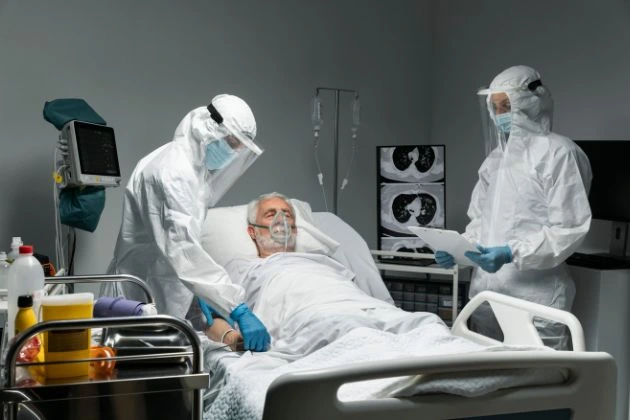
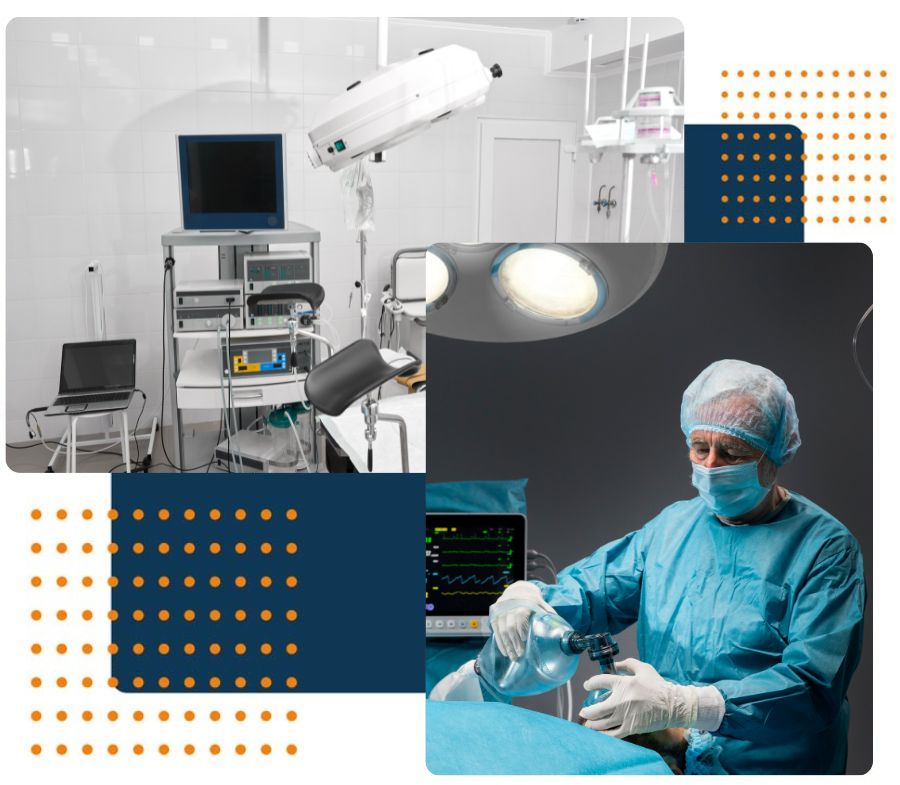
Understanding ICU Infrastructure
What Goes Into a Properly Designed ICU Setup?
ICU Configurations
Critical Care Setups for Every Specialty & Scale
GICU / MICU
General / Medical ICU
Multi-bed critical care units for adult patients requiring intensive monitoring and organ support. The most common ICU type in private hospitals and nursing homes.
Key need: Efficient bay spacing, strong nurse sightlines, robust gas supply
SICU
Surgical ICU
Post-operative critical care - typically located adjacent to the OT complex for direct patient transfer. Requires integration with OT medical gas and HVAC systems.
Key need: Direct OT adjacency, high gas outlet density, isolation bays
CICU / CCU
Cardiac ICU / Coronary Care Unit
Specialised critical care for cardiac patients - requires central monitoring station with direct visual access to all bays, and high-reliability gas and electrical supply.
Key need: Central nurse station sightlines, UPS-backed power, cath lab proximity
NICU
Neonatal ICU
Highly specialised ICU for premature and critically ill newborns. Requires precise temperature control, very low air velocity, high-intensity lighting over each bay, and family access areas.
Key need: Strict temperature/humidity control, family bay design, infection control
PICU
Paediatric ICU
Critical care for children - requires smaller bay dimensions, family-friendly design, and paediatric-specific gas outlet and pendant configurations.
Key need: Flexible bay sizing, family seating integration, child-safe design
NICU / HDU
High Dependency Unit
Step-down care between ICU and general ward - requires bedhead panels with gas and electrical, nurse call, and adequate monitoring infrastructure at lower cost than a full ICU bay.
Key need: Cost-effective bay setup, nurse call, basic gas & monitoring outlets
ICCU
Isolation ICU Bays
Negative or positive pressure single-room isolation bays within the ICU - for infectious or immunocompromised patients requiring physical separation from the open bay area.
Key need: Pressure-controlled rooms, anteroom design, HEPA filtration
BURNS / TRAUMA
Burns & Trauma ICU
Specialist critical care for burns and trauma patients - requires enhanced infection control surfaces, higher air change rates, and flexible bay layouts for complex wound management.
Key need: Enhanced infection control, easy-clean surfaces, flexible bay access
Complete Scope
Every Element of an ICU Bay - Designed & Installed by Kapisa
Bay Structure & Partitions
- Modular glass & panel bay partitions
- Sliding glass bay doors
- Curtain track systems
- Nurse sightline glazing
- Wipeable hygienic wall panels
- Epoxy / PVC anti-static flooring
Bedhead Panel Units (BHUs)
- Medical oxygen outlets
- Medical vacuum outlets
- Medical compressed air outlets
- 13A & 5A UPS-backed sockets
- Data / ethernet points
- Nurse call / emergency call unit
- Reading & examination light
- Gas pressure alarm indicators
Ceiling Pendant & Boom Systems
- Single-arm ceiling pendants
- Double-arm ICU pendants
- Anaesthesia pendants (OT bays)
- Equipment shelf & monitor mounting
- Integrated gas & electrical on arm
- 360° rotation & height adjustment
HVAC & Infection Control
- Dedicated ICU AHU
- HEPA filtration (H13 / H14)
- Min. 15 air changes per hour
- Positive pressure - general bays
- Negative pressure - isolation bays
- Temperature 22-25°C control
- Humidity 40-60% RH control
HVAC & Infection Control
- Dedicated ICU AHU
- HEPA filtration (H13 / H14)
- Min. 15 air changes per hour
- Positive pressure - general bays
- Negative pressure - isolation bays
- Temperature 22-25°C control
- Humidity 40-60% RH control
Nurse Station & Support Areas
- Central nurse monitoring station
- Nurse call master panel
- Gas alarm master panel
- Medication preparation area
- Clean utility room
- Dirty utility / sluice room
- Hand hygiene stations at bay entry
- Family waiting & consultation area
Why Kapisa
Integrated ICU Infrastructure - Not Just Panels & Partitions
01
Full-Scope Single Vendor
Layout design, partitions, bedhead panels, gas, HVAC, nurse call, flooring, and lighting — one contract, one team, zero coordination gaps between trades.
02
Designed Around Clinical Workflow
Our ICU layouts are designed with nurse-to-patient ratios, equipment access, emergency trolley routes, and infection control workflows in mind — not just square footage.
03
NABH-Ready from Day One
Every ICU we deliver is built to NABH critical care infrastructure standards, with full documentation — commissioning reports, as-built drawings, and SOP templates.
04
Modular & Expandable
Our modular bay systems can be reconfigured or expanded as your hospital grows — without major civil works. Add bays, change layouts, or upgrade components independently.
05
Delhi-Based Engineering Team
In-house engineers in New Delhi handle all AutoCAD design, MEP coordination, and site supervision — faster response, no outsourced design delays.
06
Post-Handover AMC Support
Annual maintenance contracts available for all ICU infrastructure — bedhead panels, HVAC systems, gas outlets, and nurse call — keeping your critical care unit performing reliably.
Our ICU Delivery Process
From ICU Layout to Commissioned
Critical Care Unit - Our Process
01
Clinical Requirement Assessment
We work with your medical director and nursing team to understand bed count, patient mix, nurse staffing ratios, adjacency requirements (OT, emergency, radiology), and any specialty-specific needs such as isolation bays or NICU temperature requirements.
02
ICU Layout & Bay Design
AutoCAD layout drawings are prepared — showing bay dimensions, partition positions, bedhead panel locations, nurse station sightlines, gas and electrical routing, HVAC diffuser placement, and emergency access routes. Approved by you before any work begins.
03
Civil, Flooring & Wall Works
All civil preparation, hygienic wall panel installation, epoxy or PVC flooring, and coving works are completed before services installation begins — ensuring a clean, sealed substrate.
04
Handover, Training & NABH Documentation
Full NABH documentation pack provided. Staff orientation on bay protocols, gas isolation procedures, nurse call operation, and daily cleaning routines included at handover.
05
Bay Fit-Out & Panel Installation
Modular bay partitions, glazed screens, sliding doors, bedhead panel units, ceiling pendants, and nurse station furniture are installed and connected to the services infrastructure.
06
Commissioning & Testing
All systems are commissioned and tested — gas outlet pressures, HVAC airflow and pressure readings, nurse call function tests, lighting levels, and electrical safety checks — before handover.
07
Services Installation
Medical gas pipelines, electrical trunking, data cabling, nurse call wiring, and HVAC ductwork are installed and routed to each bay position — coordinated by our in-house MEP team.
Frequently Asked Questions
Common Questions About
ICU & Critical Care Infrastructure
Powered by MedGenz
Get Started
Planning a New Hospital or Upgrading Your OT?
- +91 80549 84719
- info@kapisahealthcare.com
- Plot No. 87, F/F Kh. No. 31/25, Behind Delhi Public School, Matiyala, Sector-3, New Delhi 110059