
Kapisa Healthcare · Delhi NCR
Hospital HVAC Systems - Infection Control Begins With the Air Your Patients Breathe

Why It's Different
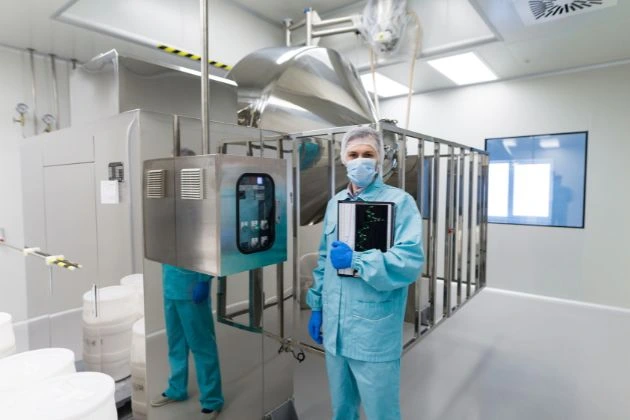
Why Hospital HVAC Is Completely Different From Commercial Air Conditioning
Zone-by-Zone Specifications
The Right Air Environment for Every Clinical Zone
25 ACH total · Positive pressure · 18–24°C · 50–60% RH · HEPA H14
Modular Operation Theatre
Laminar airflow ceiling with HEPA H14 filtration maintaining ultraclean air quality in the surgical zone. Dedicated AHU with 100% fresh air supply. Positive pressure to prevent contaminated air entering from adjacent corridors.
15–20 ACH total · Positive pressure · 22–25°C · 40–60% RH · HEPA H13
ICU & Critical Care Unit
High air change rate with HEPA filtration maintaining a clean environment for immunocompromised patients. Positive pressure in general ICU bays, with the ability to switch individual isolation bays to negative pressure.
12 ACH minimum · Negative pressure · 22–26°C · 30–60% RH · HEPA H13
Isolation Rooms (Negative Pressure)
Negative pressure rooms for infectious patients — air flows inward from the corridor into the room and is exhausted directly to the outside via HEPA-filtered extract. Prevents airborne pathogens from spreading to other areas.
15 ACH minimum · Positive pressure · 24–26°C · 40–60% RH · Low velocity
NICU
Very low air velocity to avoid draught stress on premature infants. Precise temperature control with narrow tolerance bands. HEPA filtration and positive pressure to protect highly vulnerable neonatal patients.
10 ACH minimum · Negative pressure · 18–22°C · 35–60% RH
CSSD - Decontamination Zone
Negative pressure prevents contaminated air from the decontamination zone spreading to clean and sterile areas. Dedicated exhaust with HEPA filter. Kept cooler than assembly zone to reduce bacterial growth risk.
6–10 ACH · Neutral pressure · 22–26°C · 40–60% RH
General Wards & Corridors
Lower-specification HVAC for general ward areas, with adequate fresh air supply, temperature comfort, and humidity control. Systems designed to integrate with the higher-spec zones in a coherent whole-hospital air pressure hierarchy.
Complete Scope
Complete Hospital HVAC - From
AHU to Final Commissioning
01
Air Handling Units (AHUs)
Dedicated AHUs sized for each clinical zone — OT, ICU, isolation, NICU — with HEPA filtration, heating, cooling, and humidity control integrated.
02
HEPA Filtration Systems
H13 and H14 HEPA filters for critical zones — removing 99.95–99.995% of airborne particles including bacteria, fungal spores, and fine dust.
03
Laminar Airflow Ceilings
Unidirectional laminar airflow ceiling units for OTs — delivering clean air in a controlled downward flow over the surgical site.
04
Pressure Zoning & Controls
Positive and negative pressure zone design with pressure monitoring, alarms, and automatic control to maintain the correct pressure hierarchy throughout the hospital.
05
Ductwork Design & Installation
Hygienic ductwork fabricated from galvanised steel with internal cleaning access — designed to prevent microbial growth and allow periodic decontamination.
06
Temperature & Humidity Control
Zone-by-zone temperature and relative humidity control via BMS-integrated AHU systems — with local and central monitoring capability.
07
Ventilation for Isolation Rooms
Dedicated negative pressure isolation room ventilation with direct HEPA-filtered exhaust — meeting NABH and international infection control guidelines.
08
Exhaust & Extract Systems
Dedicated exhaust systems for CSSDs, dirty utilities, sluice rooms, and isolation rooms — preventing contaminated air recirculation.
09
Commissioning & Validation
Full HVAC commissioning including airflow measurement, pressure testing, particle counts, temperature mapping, and NABH documentation at handover.
Common Questions
Common Questions About
Hospital HVAC Systems
Powered by MedGenz
Get Started
Planning a New Hospital or Upgrading Your OT?
- +91 80549 84719
- info@kapisahealthcare.com
- Plot No. 87, F/F Kh. No. 31/25, Behind Delhi Public School, Matiyala, Sector-3, New Delhi 110059